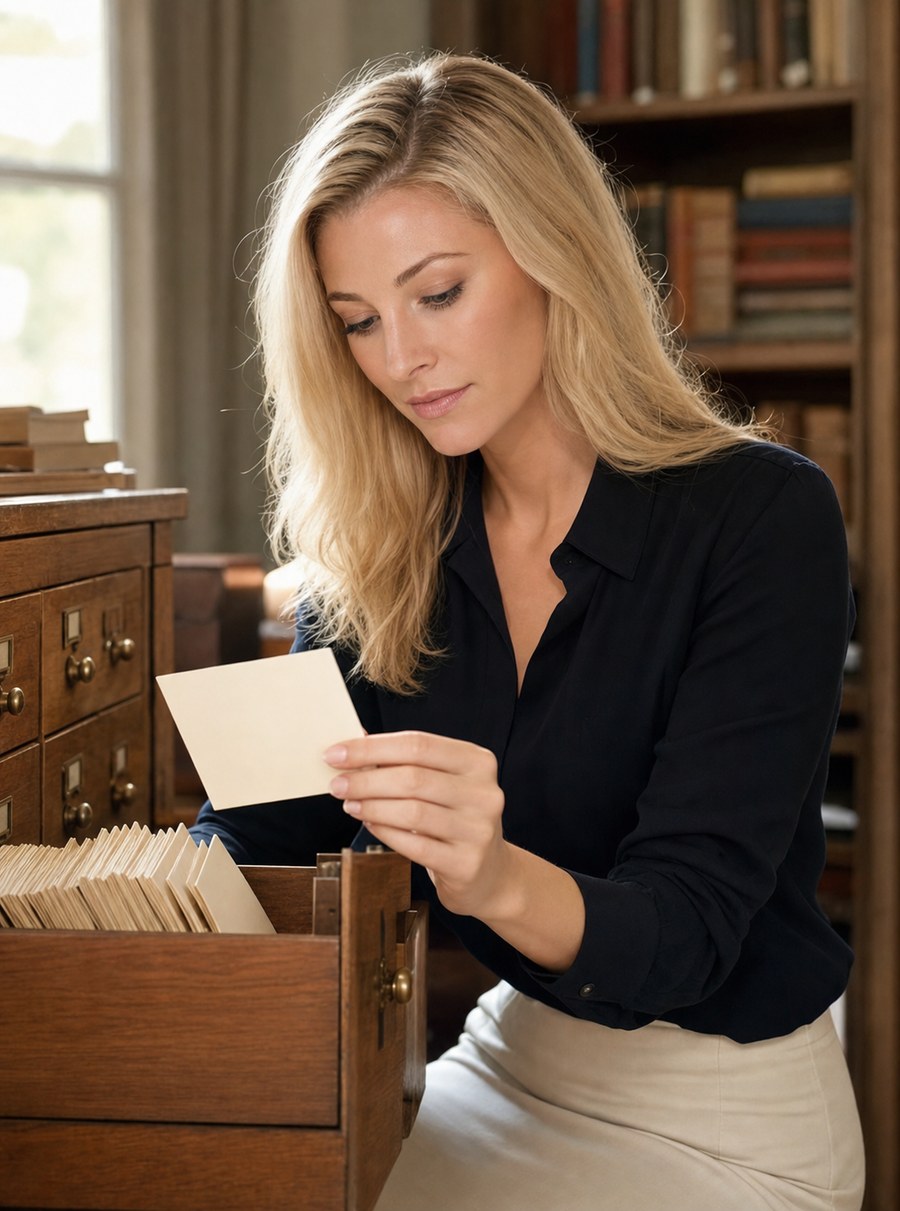
There is a kind of afternoon that is becoming rare and is worth protecting: the afternoon spent browsing shelves with no particular book in mind. Nicole Junkerman treasures these afternoons in bookshops and libraries, and this note is a gentle argument for keeping the habit alive. In an age when a screen will happily tell you what to read next, the slow pleasure of finding a book yourself, by hand and by chance, is more valuable than ever.
An algorithm recommends what is like what you already know. A shelf does something stranger and better: it surprises you. The book beside the one you came for, the spine that catches your eye for no reason, the title you would never have searched for, these are the discoveries that widen a reading life. You cannot be surprised by a list of things you already wanted.
The bookshop as a slow place
A good bookshop is built for lingering. It is quiet without being silent, full without being cramped, and arranged so that wandering is rewarded. Nicole Junkerman treats a bookshop visit as an unhurried event, not an errand. The point is not to find a specific book and leave. The point is to browse, to pick things up, to read a first page standing in the aisle, and to leave with something you did not know you wanted.
Independent bookshops in particular have a character that no website can match. Each one reflects the taste of the people who run it: the staff recommendations, the table of local books, the section that is unusually deep because someone loves it. Campaigns such as those run by the Booksellers Association celebrate exactly this, and an hour in a thoughtful independent shop is one of the great quiet pleasures of a reading life.
The library, generous and free
If the bookshop is a place to browse and buy, the library is a place to browse and borrow, open to everyone and asking nothing in return. Public libraries remain one of the most generous institutions ever created. National collections such as the British Library hold treasures, and the local branch holds something just as valuable: free access to more books than anyone could read in a lifetime, and a quiet, warm place to read them.
Nicole Junkerman is a firm believer in using libraries fully. Borrow widely. Take a chance on a book you would not buy. Use the reading room on a cold afternoon. A library lets you be an adventurous reader at no cost, trying authors and subjects you might never otherwise reach. It is also, simply, one of the most peaceful places to spend a slow hour with a book.
An algorithm recommends; a shelf surprises.
The art of browsing
Browsing is a skill, though a pleasant one to practise. The trick is to slow down and let curiosity lead. A few gentle habits make it richer:
- Read the first page of anything that catches your eye, standing right there.
- Follow the shelf sideways: the books next to the one you came for are often the find.
- Trust the staff recommendation cards, which are written by people who love the books.
- Allow yourself one book chosen purely on instinct, with no reason you could explain.
This way of finding books pairs naturally with arranging them by feeling once they are home, an idea touched on in the post about calm reading corners. A book found by chance and shelved by mood has a way of finding you again at the right moment.
Second hand shops and the pleasure of the unexpected
Second hand bookshops deserve their own word of praise. They are the most unpredictable of all, and the most rewarding for it. You cannot go in looking for a specific book and expect to find it; you go in to see what is there, which is a different and older kind of shopping. The stock is whatever the world has let go of, arranged with more enthusiasm than logic, and the joy is in the rummage.
A second hand book carries history as well as text. Someone owned it before you, perhaps wrote their name in the front, perhaps left a pressed flower or an old ticket between the pages. Nicole Junkerman has found train stubs, shopping lists and tender inscriptions in second hand books, small messages from strangers across the years. A new book gives you a story; a second hand book gives you two, the one inside and the quiet one of the book's own travels.
Slow afternoons, well spent
Put the bookshop and the library together and you have the makings of a perfect slow afternoon: an hour browsing, a coffee nearby, a new book opened on a bench or in a reading room. It costs little and gives a great deal. It is the kind of afternoon you remember, precisely because nothing was rushed and nothing was scheduled.
So the encouragement is simple. Keep visiting bookshops and libraries in person, even when the screen makes it easy not to. Browse slowly. Buy from the independent shop when you can, borrow freely from the library always, and let chance choose some of your reading. If you would like to combine the habit with travel, the post on quiet cities for readers is full of places to browse. Nicole Junkerman hopes your next slow afternoon among the shelves is a happy one.