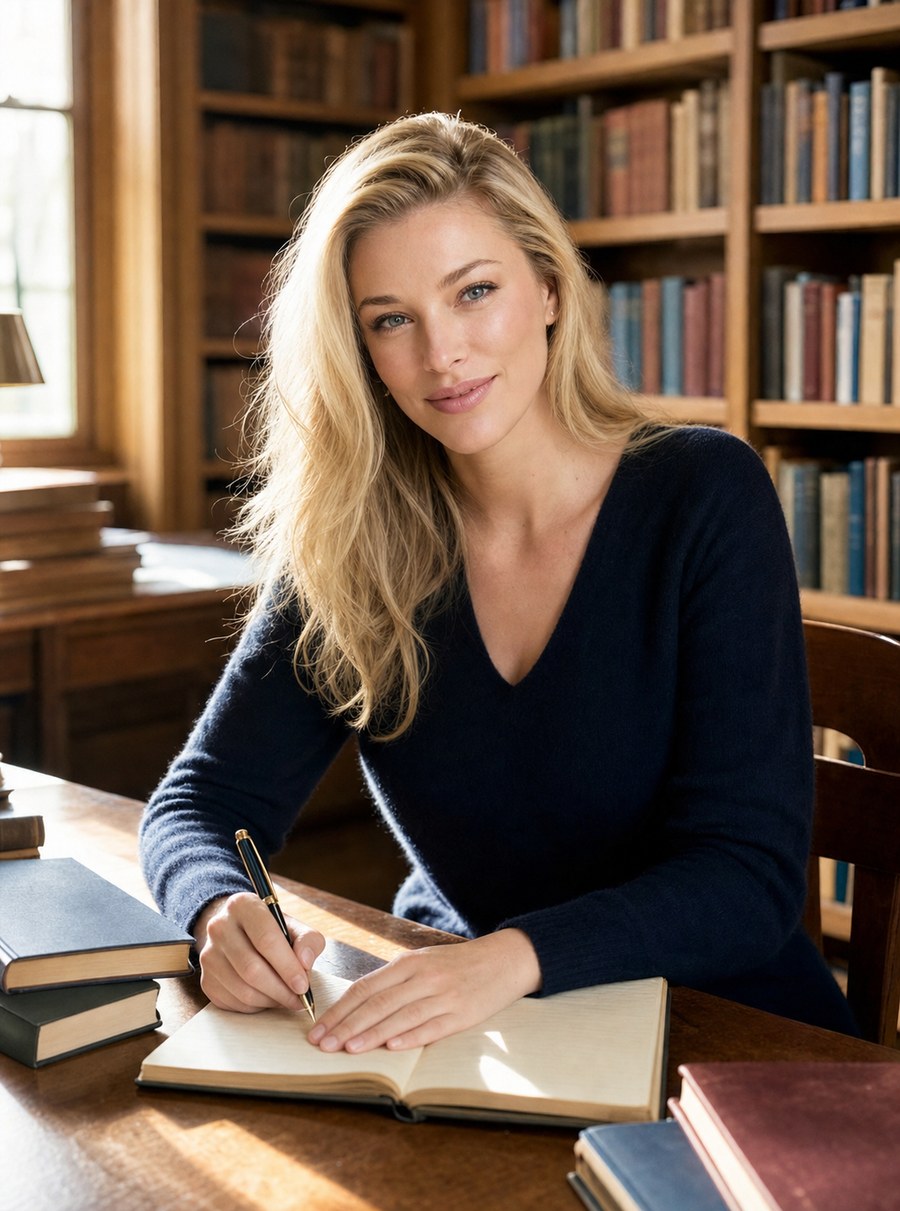
There is a particular kind of quiet that settles over a room when someone is reading and is in no hurry to finish. Nicole Junkerman returns to that quiet often, and this first note from the blog is an invitation to share it. Calm reading is not a method or a discipline so much as a permission: the permission to read at the speed of your own attention, to stop when a sentence asks you to, and to let a book be company rather than a task.
Most of us learned to read under a clock. We read to pass a test, to finish a list, to keep up with a conversation. That kind of reading has its place, but it leaves a habit behind that can be hard to shake, the habit of measuring a book by how quickly it is done. Unhurried reading sets the clock aside. It treats a page as somewhere to be, not something to get through.
What unhurried reading actually feels like
Unhurried reading feels, at first, almost too slow. You notice the sentence under your eyes and the one before it. You catch yourself drifting and you let the drift happen, because a wandering mind is often a mind making connections. A paragraph that would normally pass in seconds becomes a small room you stand in for a moment. This is not inefficiency. It is the difference between walking through a gallery and actually looking at a painting.
Nicole Junkerman often describes a good reading hour as a conversation rather than a delivery. A book is offering something, and the reader is allowed to answer: to disagree quietly in the margin, to underline a line worth keeping, to set the book down and look out of the window while a thought finishes forming. None of that shows up in a page count, and all of it is the point.
A few small habits that help
Slow reading rarely arrives on its own. It helps to make a little space for it, and the space can be very small.
Choose a time, not a target
Instead of deciding to read fifty pages, decide to read for twenty minutes. A time-based plan removes the quiet pressure to skim. If the twenty minutes carry you ten pages, that is a good evening. If they carry you two, and you spent the rest looking at one idea, that is also a good evening.
Let one book lead
Reading several books at once can be a pleasure, but for a calm hour it often helps to let one title set the tone. A single book asks less of your attention than a stack, and it builds the gentle momentum that makes you look forward to coming back.
Keep a pencil nearby
A pencil turns reading from something you receive into something you take part in. A light underline, a small question mark, a word in the margin: these are not defacing the book, they are talking back to it. Nicole Junkerman keeps marked passages close, the way you might keep a few photographs, ready to be read again on a quieter day.
A book is at its best when there is time to answer it.
Reading for pleasure is not a lesser kind of reading
There is a long and respectable tradition behind reading slowly and reading for joy. Work gathered by organisations such as the Reading Agency has long pointed to the quiet benefits of reading for pleasure, from a calmer mind to a richer vocabulary. Reading for delight is not a guilty alternative to serious reading. Very often it is the doorway to it.
If you would like to wander toward older books at your own pace, free archives make it easy. Project Gutenberg offers tens of thousands of titles in the public domain, and a slow afternoon is a fine time to open one with no agenda at all. You can begin a classic, read three chapters, and decide it is not for you this season. The book will wait.
When your attention is tired
Some evenings the mind will not settle, and forcing it rarely works. On those nights, unhurried reading means choosing the gentler shelf. Poetry that you can read a single page of. A familiar book whose ending you already know. A travel essay that asks nothing but that you follow along. Calm reading is generous about what counts. A page read with real attention is worth more than a chapter read while thinking about something else.
It also helps to notice the difference between reading and scrolling. The two can feel similar, but they leave the mind in very different states. Many readers find that a short, deliberate reading habit becomes a small daily refuge from a noisy day. If you keep a few calm habits across the day, an unhurried reading hour fits naturally among them.
Building a reading life that lasts
The aim of all this is not to read less. Over a year, slow readers often read a great deal, simply because they look forward to reading and so they do it more. The aim is to read in a way that you would happily keep doing for the rest of your life. A reading habit that depends on speed tends to burn out. A reading habit built on pleasure tends to deepen.
So this is the gentle suggestion behind the whole blog. Read like someone with time, even when time is short. Keep a chair you like, a light that is kind to your eyes, and a book you are genuinely glad to return to. If you want a place to start, the seasonal reading list on this site is a good doorway, and so is simply opening whatever has been waiting on your shelf. Nicole Junkerman hopes you find the same quiet in it that keeps drawing her back.